Compare the installation space and water supply conditions for 6- and 12-place-setting dishwashers
Key Takeaway
When choosing a dishwasher, check your countertop area and cabinet dimensions first. A 6-setting model needs 55 cm of counter space, while a 12-setting unit requires a 600 mm cabinet opening.
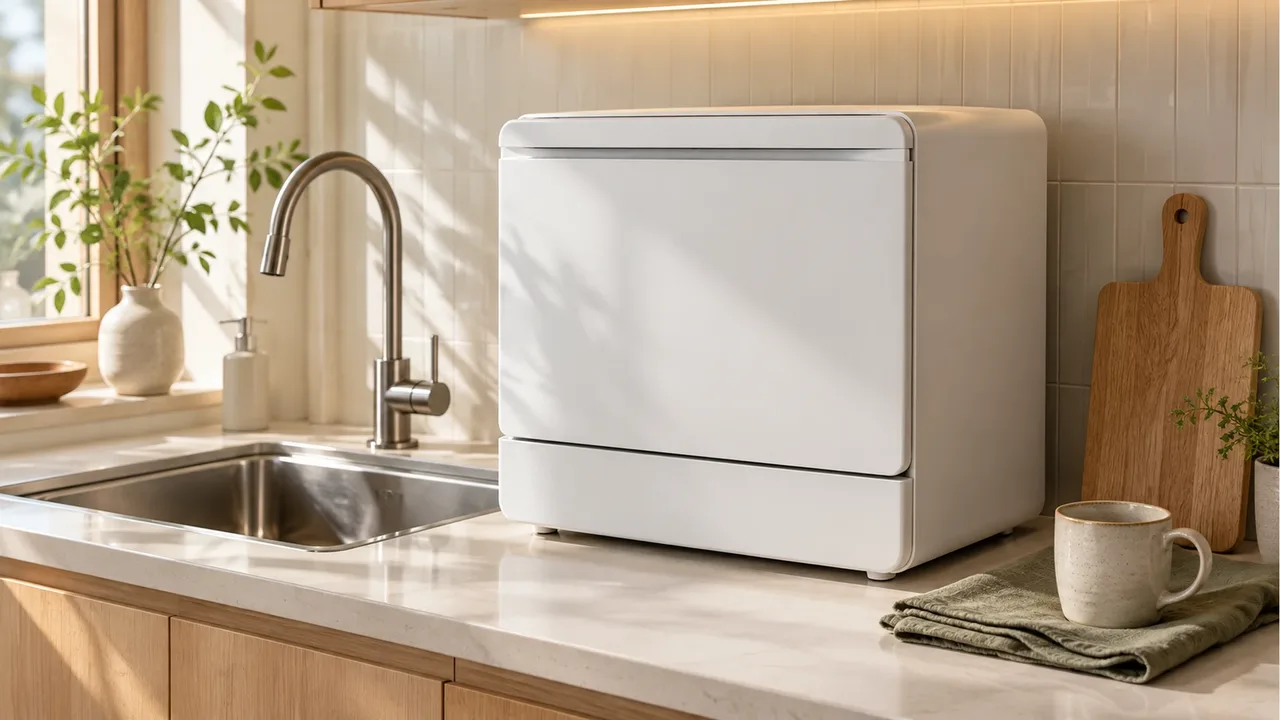
How do 6- and 12-setting dishwashers differ in size and installation?
A 6-place-setting countertop dishwasher and a 12-to-14-setting full-size unit differ starting from where they sit. A 6-setting unit sits on top of the kitchen counter. The body width is around 540 to 550 mm and depth is roughly 500 mm, occupying a dedicated corner of the food preparation counter.
In contrast, models for 12 or more place settings are built into the lower kitchen cabinetry or placed freestanding on the floor. A dedicated opening of 600 mm in width, 815 to 825 mm in height, and 600 mm in depth must be completely clear within the lower cabinet line.
| Classification | 6-setting (Countertop) | 12- to 14-setting (Built-in) |
|---|---|---|
| Placement | On kitchen countertop | Recessed into base cabinetry |
| Width required | Approx. 540–550 mm | Exactly 600 mm required |
| Height required | Approx. 450–500 mm on counter | 815–825 mm under counter |
| Cabinet work | None | Removal or reshaping of base cabinet |
| Water inlet | Faucet adapter or manual tank | Direct connection to water pipe |
| Drainage | Hose clipped into sink basin | Dedicated drain pipe under sink |
| Large cookware | Limited to 1 piece at a time | Pots and frying pans wash together |
| Move-out ease | Disconnect hose and move | Reinstall stored original cabinet |
Specifications and space guidelines reflect official customer support documentation from LG Electronics and Samsung Bespoke pre-installation guides, checked on October 26, 2026.
What dimensions must you measure to fit a 12-setting unit into base cabinets?
To install a 12-setting built-in model, open your kitchen lower cabinets and measure three dimensions with a tape measure: width, internal height, and toe-kick height.
First is the width. The target cabinet opening must be exactly 600 mm wide to slide the machine in without extensive modifications. If the existing cabinet is narrower, such as 450 or 500 mm, neighboring cabinets must be cut or reduced in size. If the existing cabinet is 800 or 900 mm wide, the remaining 200 to 300 mm gap must be filled with a custom filler cabinet.
Second is the height from the finished floor tile to the underside of the countertop. Standard manufacturer specifications call for 815 to 825 mm. If new flooring was layered on top of older floors or the countertop was built lower, dropping the clearance below 810 mm, the top of the dishwasher will catch and fail to slide in. That situation can require lifting the countertop.
Third is the toe-kick plinth that covers the base front. For the dishwasher door to swing open fully forward without the bottom edge hitting the plinth, many models require notching 10 to 20 mm off the top of the toe kick. In a rented home, check with your landlord whether this trimming counts as restoration damage before work begins.

What water supply and drainage details are easy to overlook with a 6-setting model?
A 6-setting model avoids dismantling cabinetry, but you must account for kitchen traffic and water pathways. Many people look only at the 55 cm width and regret losing practical meal preparation space later.
First is food preparation space. Placing a 6-setting unit right next to the sink can cut the counter space for cutting and ingredient prep in half. Check also whether opening upper cabinet doors clears the top of the dishwasher, which needs at least 50 cm of vertical room.
Second is hose reach. If the distance between the faucet and dishwasher is large, the water inlet hose stretches across the counter. Unless using a manual pour-in tank model, you must either drill a small 10 to 12 mm hole through the sink edge or connect a diverter adapter directly to the faucet aerator head.
Third is drain hose anchoring. A countertop unit empties hot rinse water directly into the sink basin through its drain hose. If the suction cup at the hose tip detaches, the hose can whip out during pumping and spill hot water onto the kitchen floor. Ensure there is adequate room inside the sink basin to firmly secure the drain hose.
Which option fits your kitchen and living arrangement?
The decision becomes clear when balancing dish volume against living arrangements.
For single-person households, newlyweds, or renters who move every two to three years, a 6-setting model is the practical choice. It requires no cabinet modification costs, and when moving out, simply disconnecting the hose leaves no restoration disputes behind. It easily handles daily bowls, plates, and cups.
However, if you cook frequently and must wash large frying pans, stockpots, and cutting boards daily, a 6-setting model feels restrictive. Fitting a large pot crowds out other dishes, forcing you to wash items by hand anyway.
For households of three or more or homeowners who want to run one evening load containing every cooking tool, a 12-to-14-setting built-in is the right choice. Even with base cabinet remodeling expenses, the capacity and convenience offer far higher daily satisfaction.
Measure your planned dishwasher space with a tape measure. For a 6-setting unit, verify 55 cm of counter width and faucet distance; for a 12-setting unit, verify a 600 mm cabinet opening and toe-kick height first. Installation clearance and faucet compatibility standards were confirmed from LG Electronics and Samsung Electronics customer support guides on October 26, 2026, and future changes can be referenced on the manufacturers' support portals.
Frequently Asked Questions
Can you install a 12-setting built-in in a rental home?
Restoration conditions apply. Because it involves removing or cutting base cabinets, you need the landlord's prior agreement and storage space for the removed cabinet.
Can a 6-setting dishwasher be used without drilling a hole in the sink?
Yes, with a manual water-tank model. Direct-connection models require a small hole in the countertop or an adapter directly on the faucet.
Will a 12-setting dishwasher fit where a 55 cm base cabinet sits?
No. Standard 12-to-14-setting built-in dishwashers strictly require a 600 mm opening, so a 55 cm cabinet requires remodeling neighboring cabinetry.
Sources & Verification Date
- LG DIOS Dishwasher Pre-Installation Checklist and Space Guide · Verified
- Samsung Bespoke Dishwasher Pre-Installation Space Requirements Guide · Verified
- Korea Consumer Agency Dishwasher Quality Comparison Test Results · Verified
All materials have been verified from official announcements and may have changed since verification.